Steel Hub

A seamless tube is the right choice for high-pressure service when the consequence of a local material discontinuity is significant and the operating conditions leave little room for uncertainty. That commonly includes systems combining high internal pressure with elevated or cycling temperature, corrosive media, severe vibration, rapid pressure changes, or difficult access for inspection and repair.
The absence of a longitudinal weld is the practical distinction. A welded tube can perform reliably in many pressure applications when its weld quality, heat treatment, inspection, and service conditions are properly controlled. But when the weld line would become the most highly scrutinized feature in the pressure boundary, specifying a seamless tube can simplify the risk case. It does not eliminate the need for sound material selection, thickness calculation, dimensional control, or non-destructive examination. It removes one potential variable from the equation.
For technical evaluators, the question is therefore not whether seamless tube is inherently “stronger” in every situation. The question is whether the duty cycle, failure consequence, and applicable code requirements justify paying for a product with no longitudinal weld seam and often tighter control over its suitability for demanding service.
Pressure alone is not a sufficient selection rule
High design pressure is an obvious trigger for considering seamless construction, but it should not be used as a stand-alone rule. A straight tube under stable internal pressure may be adequately served by a qualified welded product if the governing specification permits it, the weld seam is appropriately inspected, and the selected wall thickness provides sufficient margin. The decision changes as service becomes less forgiving.
A seamless tube deserves stronger consideration where pressure is combined with one or more of the following conditions:
- Repeated pressure cycling that can accumulate fatigue damage over a long operating life.
- High operating temperature, especially where creep strength, oxidation resistance, or thermal expansion must be controlled.
- Low-temperature operation where fracture toughness and material consistency are important.
- Hydraulic systems with pressure spikes, pulsation, or fast valve actuation.
- Steam, boiler, superheater, reheater, or heat-exchanger duties where tube integrity affects plant availability and safety.
- Corrosive or erosive fluids that can reduce effective wall thickness or concentrate damage at surface imperfections.
- Energy, process, or offshore systems where a leak would create a serious safety, environmental, or shutdown event.
- Locations where inspection access is restricted and replacement would be expensive or disruptive.
These factors matter because pressure boundaries rarely fail as ideal calculations suggest. Local thinning, residual stress, geometric variation, poor end preparation, vibration, and transient loads can move a component closer to failure than its nominal pressure rating indicates. A seamless tube is often selected to improve confidence where those effects cannot be easily monitored or tolerated.
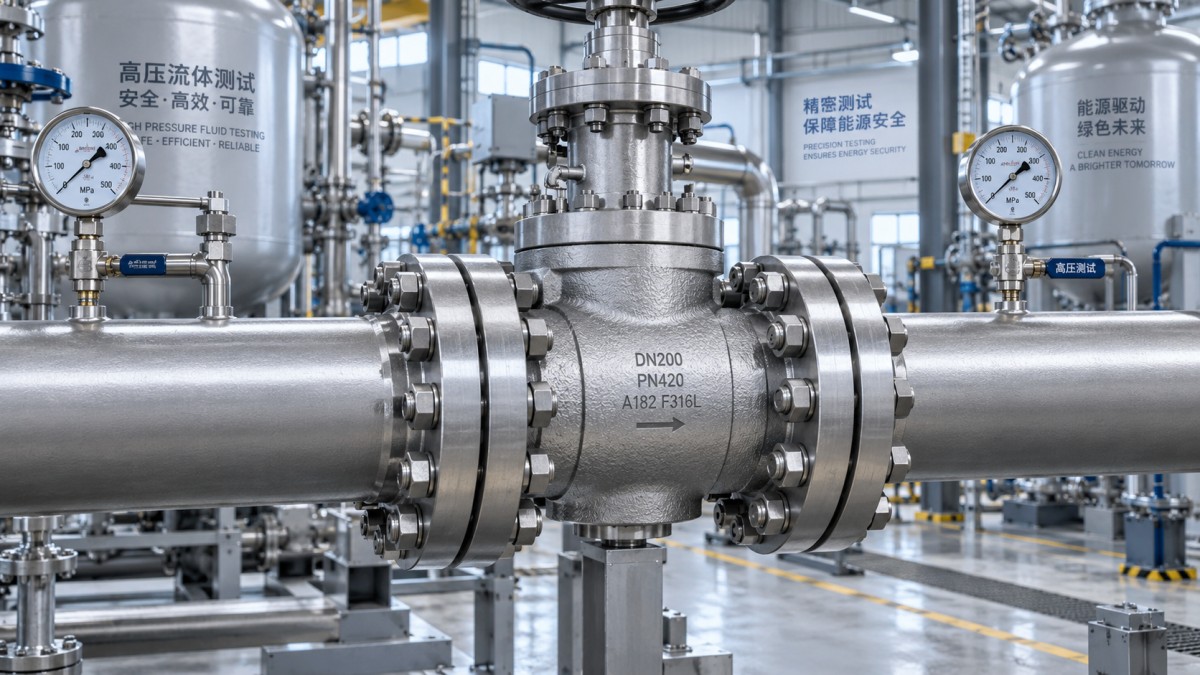
Where seamless construction has the clearest value
Hydraulic and fluid-power systems are a common example. A line can experience frequent pressure pulses far above its steady operating condition, particularly near pumps, accumulators, cylinders, and fast-acting controls. In these systems, fatigue performance, surface condition, dimensional accuracy, and compatibility with bending or flaring operations can matter as much as nominal burst resistance. A suitable seamless precision tube may provide a more predictable starting point for fabrication, provided its grade, delivery condition, and cleanliness match the application.
Boiler and high-temperature process service is another area where seamless tube is often justified. Here, the selection is tied to more than internal pressure. Metal temperature, temperature gradients, external deposits, oxidation, and long-term microstructural stability all influence tube life. A tube grade selected only for room-temperature tensile strength may be unsuitable even when its dimensions appear adequate. The evaluator needs to consider the design temperature properties required by the applicable construction code, along with the expected water chemistry, fuel-side environment, and inspection regime.
In power generation, refinery, chemical processing, and energy transport, seamless tube can also be appropriate where a leak would interrupt a critical process or introduce a hazardous release. That does not mean every line in such a facility must be seamless. Utility lines, low-pressure services, and larger-diameter piping may be better served by other forms of pipe or tube. The strongest case is generally found in smaller-diameter, high-pressure, high-temperature, or cyclic services where the tube itself is a critical containment component.
A weld seam is not automatically a defect
The most common oversimplification is to treat welded tube as unsuitable for high pressure by definition. That is not technically sound. Modern welded tube can be manufactured to demanding standards, with controlled welding procedures, heat treatment, dimensional control, and inspection. For many services, a correctly specified welded product is fully acceptable and can offer meaningful advantages in availability, size range, or cost.
The issue is not the mere presence of a weld. It is whether the seam introduces a qualification burden or risk that is disproportionate to the application. Depending on the manufacturing route and specification, the seam may require attention to weld integrity, heat-affected-zone properties, residual stresses, corrosion behavior, and inspection coverage. In a routine application with accessible lines and conservative operating conditions, that burden may be manageable. In a high-consequence service, the design team may reasonably prefer seamless construction to reduce the number of variables that require validation.
Seamless tube also has limits. Its manufacture does not guarantee uniform properties around the full circumference or along the full length. Eccentric wall thickness, internal surface defects, decarburization, inclusions, and dimensional variation still require control. A seamless designation should never be used as a substitute for reviewing the material certificate, manufacturing standard, inspection requirements, and supplier capability.
Start with the governing design conditions
The correct specification begins with a clear service envelope. Technical teams should define the maximum allowable working pressure, design temperature, minimum metal temperature, fluid composition, pressure-cycle profile, and the consequences of leakage. These inputs determine whether seamless construction is necessary and, if it is, what grade and inspection scope should follow.
Wall thickness should be derived from the applicable design code or engineering method, not selected from a catalogue alone. The calculation must reflect the chosen material’s allowable stress at design temperature, outside diameter, required corrosion or erosion allowance, and any code factors relevant to the tube form. Nominal wall thickness is only part of the picture. The minimum supplied wall, permitted tolerance, and any subsequent machining, bending, or forming must still leave adequate thickness in service.
Temperature deserves particular attention. Carbon steel seamless tube may be appropriate for moderate-temperature pressure service, but elevated-temperature duty may require alloy grades selected for high-temperature strength and oxidation resistance. For low-temperature applications, toughness performance may govern the decision. For chloride-bearing, sour, acidic, or otherwise corrosive media, alloy selection and corrosion allowance may be more decisive than the choice between seamless and welded construction.
In other words, seamless construction answers one question about product form. It does not answer the broader materials-engineering question.
Dimensions and fabrication can change the answer
Many high-pressure systems use relatively small outside diameters with comparatively heavy walls. This geometry is favorable for seamless tube, particularly when the line will be bent, flared, swaged, machined, or connected with high-pressure fittings. A uniform and predictable tube geometry supports repeatable fabrication, but the purchaser should define the dimensional controls that the assembly actually requires.
Outside diameter tolerance affects fit-up with fittings, clamps, and automated bending equipment. Wall thickness tolerance affects pressure capacity and bend performance. Straightness affects installation in long runs. Surface finish can influence sealing, fatigue initiation, and corrosion behavior. Where tubing is to be cold bent, the required bend radius and post-bend inspection method should be considered before ordering material. A tube that meets a general supply standard may still create problems if the downstream fabrication route needs tighter tolerances or a specific delivery condition.
Specify the evidence, not just the product name
Ordering “seamless tube for high pressure” is too vague for a critical application. The purchase specification should identify the applicable material standard, grade, dimensions, tolerance class, delivery condition, heat treatment where relevant, test requirements, traceability expectations, and documentation needed for release.
Hydrostatic testing, eddy-current testing, ultrasonic examination, and visual or dimensional inspection each address different risks. Their relevance depends on the tube size, wall thickness, governing standard, and anticipated failure mechanisms. A buyer should avoid assuming that a generic test statement provides the same assurance across all products. The test method, coverage, acceptance criteria, and certificate content need to align with the service duty.
Traceability becomes more important as pressure, temperature, and consequence rise. Heat identification and material certification help preserve the connection between the installed tube and its verified chemistry, mechanical properties, and inspection record. This is especially important after cutting, fabrication, and site installation, when mixed material or lost identification can undermine an otherwise sound specification.
For applications subject to a construction code, the code hierarchy should lead the process. Project specifications can add requirements, but they should not accidentally conflict with the approved material form, allowable stress basis, joining method, or examination rules. A seamless tube may be available in the desired grade and size yet still be unsuitable if its documentation or standard designation does not support the design basis.
Consider lifecycle cost rather than tube price alone
A seamless tube commonly carries a cost premium, and it may have longer lead times in unusual grades, heavy-wall sizes, or tightly controlled tolerances. That premium is justified when it prevents a larger cost: unplanned shutdown, difficult field replacement, excessive qualification work, or unacceptable leak risk.
It is less justified when the operating duty is stable, the line is accessible, a welded alternative is accepted by the governing specification, and the required quality can be demonstrated through established controls. Specifying seamless construction across an entire system simply because part of the system operates at high pressure can add cost without materially improving reliability.
A useful decision is often made line by line, or service class by service class. Reserve seamless tube for the circuits where pressure transients, temperature, fatigue, corrosion exposure, or consequence of failure make the absence of a longitudinal weld a meaningful engineering advantage. Use the applicable code, the service envelope, and the required inspection evidence to define that boundary.
For high-pressure service, the strongest specification is rarely the one with the most conservative product label. It is the one in which tube form, material grade, minimum wall, fabrication method, examination scope, and operating conditions all support the same reliability target.
Please give us a message
Tianjin Kaichuang Metal Material Co., Ltd
Add: No. 41, District 6, First Street, Huanghuadian Town, Wuqing District, Tianjin
Tel: + 86 137 9101 9833
E-mail: boss@kaichsteel.com