Steel Hub

The safer boiler tube is not automatically the seamless one. Safety depends on whether the tube’s pressure-temperature duty, degradation mechanism, fabrication route, inspection evidence, and governing code requirements are aligned. In a controlled application with an appropriate material grade, a qualified longitudinal weld, and meaningful nondestructive examination, a welded boiler tube can be safer than a seamless alternative because its wall thickness, straightness, and material consistency may be more tightly controlled.
That conclusion does not reduce the importance of the weld seam. It changes the question. Rather than asking whether a weld exists, the technical evaluation should ask whether the weld is the limiting feature under the actual service conditions, and whether the specification provides enough evidence to rule out relevant weld-related defects before the tube enters service.
For boiler tubing, the answer is strongly dependent on location. Economizer tubes, lower-temperature generating-bank tubes, and certain heat-recovery surfaces may have a very different risk profile from high-temperature superheater or reheater tubes. A selection rule that treats all pressure parts alike can either create unnecessary cost or leave critical failure mechanisms insufficiently addressed.
Why seamless has the stronger reputation—and where that logic stops
Seamless tube is produced without a longitudinal fusion weld. This removes one obvious metallurgical discontinuity and has long made seamless construction the conservative default for demanding pressure service. It remains highly relevant where high temperature, high stress, thick-wall sections, demanding creep performance, severe thermal cycling, or difficult fabrication conditions make the consequences of local variation unacceptable.
However, “no seam” is not the same as “no risk.” Seamless production introduces its own quality variables: eccentric wall thickness, internal surface defects, laps, laminations, longitudinal imperfections, and variation related to piercing, elongation, and heat treatment. These are manageable when the tube is properly made and inspected, but they illustrate why manufacturing route alone cannot establish fitness for service.
Modern welded tube production can offer advantages that matter directly to boiler integrity. Strip feedstock can be selected for tightly controlled chemistry and thickness. Forming and welding can be automated. The weld area can be subjected to online monitoring, post-weld heat treatment where required, and targeted nondestructive examination. The result can be highly uniform geometry along long production lengths, particularly in smaller outside diameters and thinner walls.
The important distinction is not welded versus seamless in the abstract. It is between a tube with a documented, code-appropriate quality system and a tube selected merely because its product description sounds conservative.
Conditions under which welded tube can be the safer engineering choice
Welded boiler tube becomes a defensible—and in some cases preferable—choice when the service envelope is moderate enough for the applicable welded-tube specification and the principal safety concern is controlled by dimensional consistency, inspection coverage, or supply traceability rather than by extreme creep exposure.
For example, lower-temperature pressure parts may benefit from a tube with close wall-thickness control. In heat-transfer equipment, local under-thickness is not only a design-margin issue; it can influence metal temperature, remaining corrosion allowance, bending behavior, and life under external wastage. A well-controlled welded tube made from uniform strip may reduce wall variation compared with a poorly specified seamless alternative. The relevant comparison is between certified products from qualified sources, not between idealized manufacturing routes.
Welded tubes can also be attractive where straightness and repeatable outside diameter are important for automated panel welding, close tube spacing, fin attachment, or assembly into compact heat-transfer modules. Better geometric consistency can reduce fabrication-induced stress and improve fit-up. That does not make the weld seam irrelevant, but it can lower risks created elsewhere in the fabrication chain.
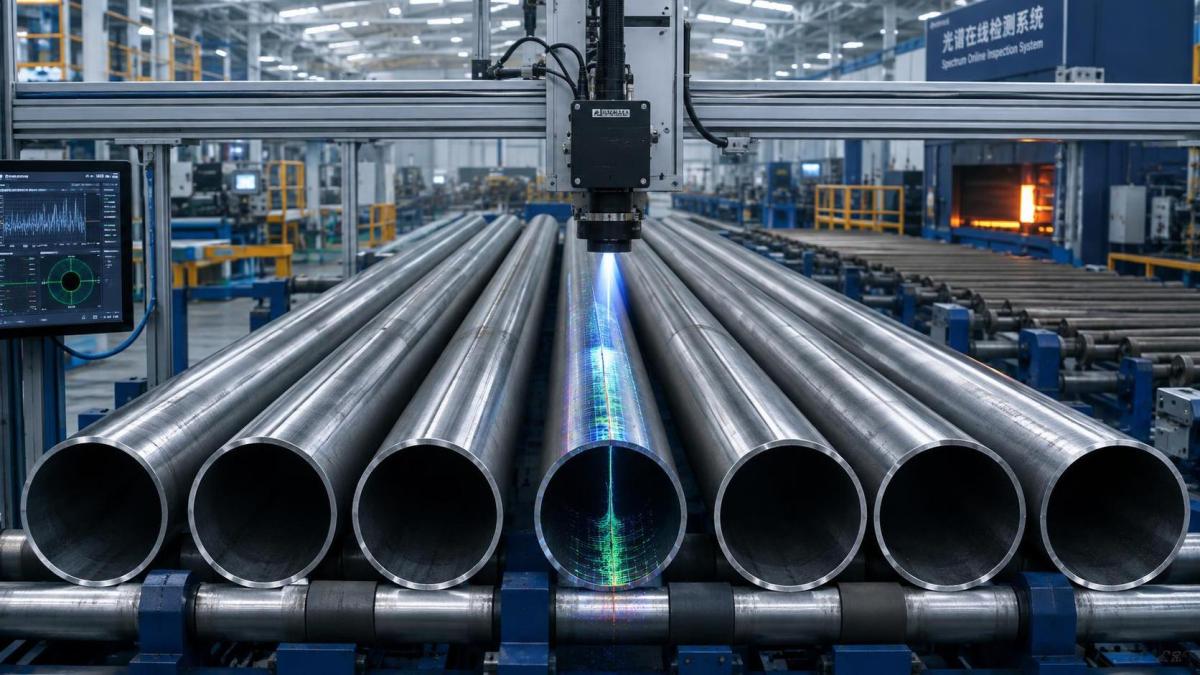
Another reason is inspectability. In a properly specified welded product, the seam is a known, accessible feature. Depending on the standard, manufacturing process, and contractual requirements, it may receive continuous or targeted examination using methods such as eddy-current testing, ultrasonic testing, or other suitable nondestructive techniques. The evaluator should not assume that a test method is included simply because a tube is called “welded”; examination scope must be confirmed in the governing specification and purchase documentation.
In applications where a long, stable supply of a particular size is needed, welded tube can also reduce substitution risk. A technically sound design can still be undermined if the selected seamless size has limited availability, inconsistent sourcing, or long lead times that encourage uncontrolled material substitutions. Supply reliability is not a commercial issue separate from engineering safety. It affects the likelihood that the installed tube will actually match the approved design basis.
The service conditions that should keep seamless at the center of the evaluation
There are circumstances in which a seamless tube remains the more prudent baseline. Elevated-temperature components subject to creep damage deserve particular caution. In superheaters and reheaters, long-term strength depends on metallurgical stability under temperature and stress, not simply on room-temperature tensile properties. A longitudinal weld and its heat-affected zone can introduce microstructural concerns that require a very specific qualification route. If the proposed welded tube is not explicitly covered for that duty by the applicable design code and material specification, it should not be treated as an equivalent substitute.
Seamless construction may also be preferred where severe thermal transients, high design pressure, aggressive fireside or waterside corrosion, hydrogen-related damage mechanisms, or exceptional consequence of failure narrow the acceptable margin. In such cases, the question is not whether welded tube can be manufactured well. It is whether the selected welded product has enough material-property evidence, production control, and service history within the relevant code framework to carry the duty with confidence.
Thicker-wall tube adds another layer of caution. As section thickness rises, through-wall thermal gradients, forming stresses, heat-treatment effectiveness, and inspection sensitivity become more consequential. A proposed substitution should therefore be assessed against the exact outside diameter-to-wall ratio, not approved by broad material family alone.
The weld seam must be evaluated as a system, not a line item
A welded tube is only as reliable as the complete relationship among strip quality, edge preparation, welding process, heat input, post-weld treatment, inspection, and traceability. It is common to focus narrowly on whether the seam has been tested. That is necessary but incomplete.
High-frequency electric resistance welding is widely used for carbon and low-alloy tube products. Its suitability depends on disciplined control of the welding process and on removal or management of weld-related features as required by the applicable product standard. Fusion-welded products raise different questions involving filler metal, weld profile, heat-affected-zone properties, and the qualified welding procedure. These routes should not be grouped together merely because both produce “welded tube.”
For boiler service, the specification should make clear:
- the exact material standard, grade, tube dimensions, and manufacturing process permitted;
- the required heat treatment, including any normalizing or stress-relief condition where applicable;
- the extent and acceptance criteria of hydrostatic and nondestructive testing;
- requirements for weld seam location, scarfing or flash removal where relevant, and surface finish;
- chemical composition limits, mechanical-property requirements, and any supplementary requirements needed for the duty;
- heat, lot, and tube-level traceability appropriate to the component’s criticality.
These requirements should be read together with the construction code governing the boiler. In many projects, ASME Boiler and Pressure Vessel Code requirements, adopted national rules, customer specifications, and material standards all interact. ASTM and ASME material designations may be technically related but are not interchangeable by assumption. The approved design code, edition, jurisdictional requirements, and certificate language determine what can be used.
Pressure rating alone is an inadequate selection screen
A frequent mistake in deciding how to choose between welded and seamless steel tube for boiler use is to compare nominal pressure ratings and stop there. Tube failure is rarely explained by pressure alone. The relevant stress state is influenced by outside diameter, wall thickness, design temperature, allowable stress, corrosion allowance, manufacturing tolerance, bending strain, attachment loads, and local metal-temperature excursions.
Temperature deserves particular attention because it changes both material strength and damage mechanism. A tube that is entirely acceptable at saturated-steam or economizer conditions may not be appropriate after being moved to a zone where gas-side fouling, flame impingement, or reduced internal flow drives metal temperature upward. The design temperature must represent credible tube-metal temperature, not simply the nominal fluid temperature.
Corrosion and erosion can overturn an otherwise sound material choice. Coal ash, biomass ash, waste-derived fuels, chloride-bearing deposits, reducing atmospheres, oxygenated feedwater, under-deposit corrosion, and flow-accelerated corrosion each attack tube life differently. A welded seam can be vulnerable if its metallurgy or surface condition differs unfavorably from the parent material, but a seamless tube with inadequate corrosion allowance or inappropriate alloy selection will fail for the same broader reason: the material was not matched to the environment.
The practical implication is that welded-versus-seamless selection should occur after the degradation assessment, not before it. Define the credible damage mechanism, then determine whether the available welded specification has sufficient qualification for that mechanism.
Dimensional control can become a safety variable
Boiler tube drawings often list nominal outside diameter and nominal wall, yet the minimum permitted wall after manufacturing tolerance is what affects pressure capacity. A lower-cost tube with a broad negative wall tolerance may leave less usable margin than expected. This is especially important when corrosion allowance is small, tube bending is severe, or the design is already close to the minimum required thickness.
Welded tube can offer a practical advantage where strip thickness is closely controlled and the supplier can demonstrate stable wall distribution. But that advantage should be verified from inspection records and dimensional requirements, not presumed from process type. The purchaser should define the required minimum wall condition, ovality, straightness, and dimensional inspection frequency. Where tube ends will be expanded, swaged, or welded into headers, dimensional consistency also affects fabrication quality.
A comparison should include the full tolerance stack: mill tolerance, corrosion allowance, bending thinning, installation effects, and any local grinding or blending allowed during fabrication. Nominal dimensions alone do not provide that picture.
What test certificates do—and do not—prove
Mill test certificates are essential, but they are not a substitute for a complete quality plan. They generally document chemistry, mechanical tests, heat treatment, and other standard-specific results. Their value depends on traceability from certificate to actual tube bundle and then to installed component.
For welded tubing, review whether the documentation identifies the weld process, nondestructive examination method, examination extent, and applicable acceptance criteria. A statement that material was “tested” has limited value unless the test method and scope are known. Hydrostatic testing demonstrates pressure containment at the test condition; it does not necessarily reveal every planar defect, every local metallurgical issue, or long-term corrosion susceptibility. Eddy-current and ultrasonic methods also have different strengths and limitations depending on defect orientation, wall thickness, surface condition, and calibration.
Where the consequences of failure are significant, technical evaluation should examine the manufacturer’s ability to maintain process consistency rather than relying only on a single sample result. This may include review of quality-system controls, procedure qualifications, calibration practices, lot segregation, retest rules, and management of nonconforming material. The depth of review should be proportional to service severity and project requirements.
A more useful decision boundary
Welded boiler tube is a safer choice when the applicable code and material specification explicitly support it; when temperature and stress do not create an unqualified creep or heat-affected-zone concern; when corrosion mechanisms have been assessed; when wall tolerance and geometry improve fabrication control; and when the seam receives defined, verifiable quality control.
Seamless tube deserves preference when the operating envelope makes weld-zone uncertainty unacceptable, when elevated-temperature strength and long-term metallurgical stability dominate the design, or when the relevant code, specification, or owner requirement does not clearly permit the proposed welded construction.
The decision should therefore be documented as a service-specific equivalency assessment, not as a generic cost-saving substitution. The decisive evidence is the combination of code acceptance, verified material properties, weld-process qualification, inspection coverage, dimensional margin, and degradation resistance. A welded tube selected on that basis is not a compromise. A seamless tube selected without that discipline is not automatically the safer option.
Please give us a message
Tianjin Kaichuang Metal Material Co., Ltd
Add: No. 41, District 6, First Street, Huanghuadian Town, Wuqing District, Tianjin
Tel: + 86 137 9101 9833
E-mail: boss@kaichsteel.com