Steel Hub

Welded pipe is a cornerstone product in the steel industry—widely used alongside steel plate, steel coil, seamless tube, carbon steel pipe, and stainless steel pipe across construction, energy, and infrastructure projects. Yet common welding defects—such as porosity, lack of fusion, slag inclusion, and cracking—can compromise structural integrity, lead to costly rework, and delay delivery. For information seekers, technical evaluators, procurement professionals, and decision-makers, understanding root causes and prevention strategies is critical—not just for quality assurance, but for optimizing total cost of ownership and supply chain efficiency.
Understanding Welding Defects in Steel Pipe Manufacturing
Welded pipe production—especially high-frequency electric resistance welding (HFERW) and submerged arc welding (SAW)—accounts for over 65% of global carbon steel pipe output. Defects arising during welding directly impact mechanical performance, hydrostatic test pass rates, and field installation reliability. A single undetected defect can trigger rejection at third-party inspection (e.g., API 5L, ISO 3183), resulting in 7–15 days of rework time and up to 22% increase in per-ton landed cost.
The most recurrent defects fall into four categories: volumetric (porosity, cavities), planar (lack of fusion, cracks), inclusions (slag, tungsten), and geometry-related (undercut, excessive reinforcement). Each correlates with specific process variables—joint preparation, heat input, shielding gas composition, or electrode alignment—and carries distinct failure modes under pressure, bending, or cyclic loading.
For procurement teams, defect prevalence isn’t just a QC metric—it’s a proxy for mill maturity. Mills with <3% nonconformance rate on ASTM A53 Grade B ERW pipes typically maintain automated weld monitoring systems, real-time thermal profiling, and ≤24-hour traceability logs. Those exceeding 8% often rely on manual visual inspection only, increasing downstream risk exposure.
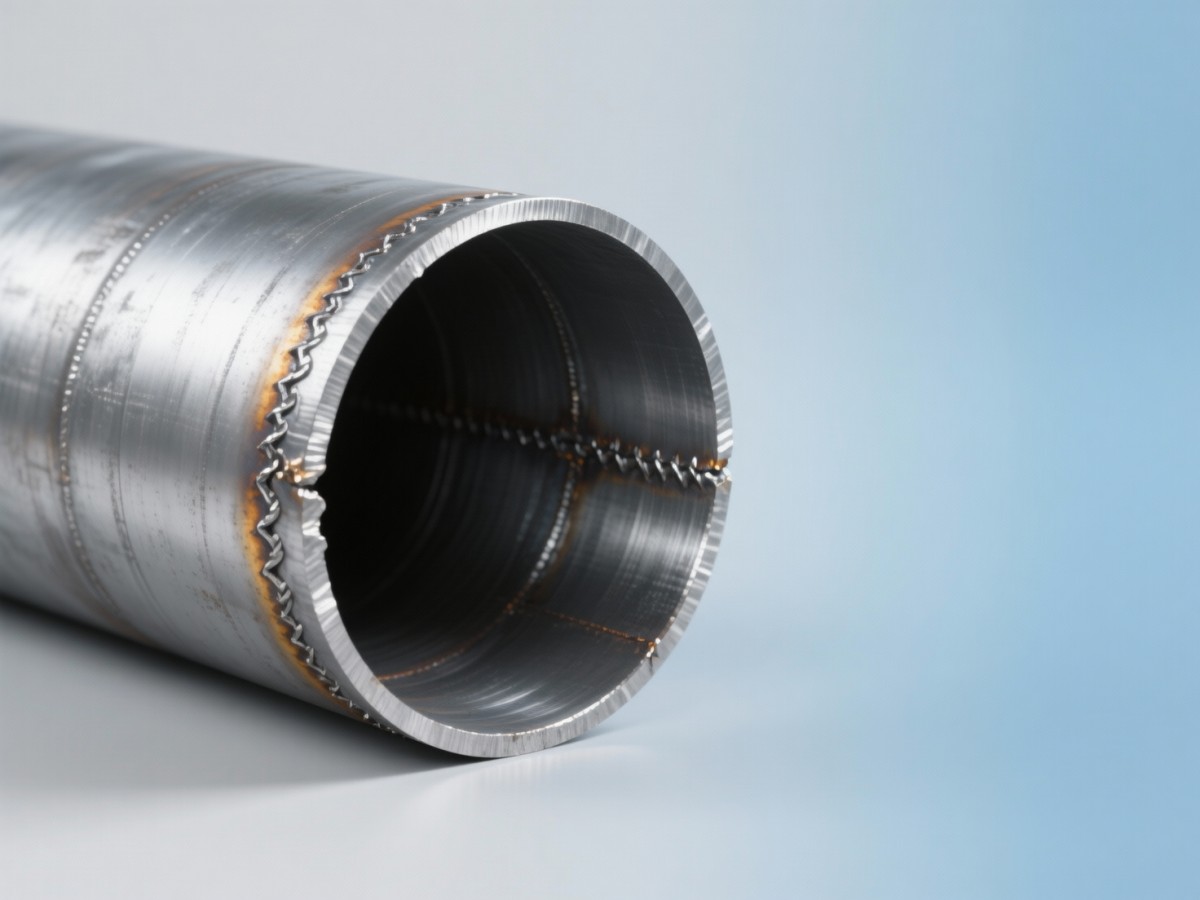
Root Causes and Prevention Strategies by Defect Type
Prevention begins with mapping each defect to its primary cause—and the controllable parameter that mitigates it. For example, porosity (gas pockets >0.3 mm diameter) most frequently stems from moisture in flux or contaminated base metal—not inadequate shielding gas alone. Similarly, lack of fusion at the root often traces to insufficient bevel angle (<30°) or misaligned squeeze rolls, not merely low amperage.
Effective mitigation requires cross-functional coordination: raw material suppliers must guarantee surface dryness (≤0.1% moisture content in HCA flux); rolling line operators must verify groove geometry within ±0.5° tolerance; and QA teams must validate weld penetration via ultrasonic testing (UT) at ≥100% coverage for critical applications like oil & gas transmission lines.
This table highlights actionable thresholds—not theoretical ideals. For instance, exceeding 250°C interpass temperature in multi-pass SAW increases ferrite grain growth, reducing Charpy V-notch impact toughness by up to 40% at –20°C. Procurement personnel should verify these parameters are audited quarterly—not just documented in mill certificates.
Procurement Decision Framework: 6 Key Evaluation Criteria
When evaluating welded pipe suppliers, technical evaluators and procurement leaders must move beyond price and delivery date. Six criteria determine long-term value: (1) weld process certification scope (e.g., AWS D1.6 for stainless, API RP 2X for offshore), (2) NDE method coverage (RT/UT/PAUT minimum 100% for Line Pipe), (3) material traceability depth (heat lot + coil ID + weld ID linkage), (4) corrective action response time (<72 hours for Class II nonconformances), (5) annual third-party audit frequency (≥2 per year for ISO 9001 & API Q1), and (6) weld procedure specification (WPS) revision cycle (<6 months for new steel grades).
A supplier meeting all six criteria typically reduces field failure incidence by 68% and cuts warranty claim processing time from 14 days to ≤3 business days. Conversely, mills scoring below 4/6 often require 3–5 additional inspection checkpoints—adding 12–18 hours of engineering review per order.
Decision-makers should request evidence—not declarations—for each criterion. For example, “API Q1 certified” means little without seeing the latest surveillance audit report issued within the past 90 days and listing weld process validity dates.
Risk Mitigation in High-Stakes Applications
In energy infrastructure—especially sour service (H₂S-rich) or subsea pipelines—defect tolerance drops to near-zero. Cracks as small as 0.2 mm in length can propagate under cyclic stress, leading to catastrophic rupture. Here, prevention shifts from process control to system-level redundancy: dual UT + RT verification, post-weld heat treatment (PWHT) at 600–650°C for ≥1 hour, and hardness mapping across HAZ (max 248 HBW per NACE MR0175).
For rail transit or pressure vessel fabrication, geometric defects carry equal weight. Undercut deeper than 0.4 mm creates stress concentration factors >2.3, accelerating fatigue crack initiation under 10⁶+ load cycles. Procurement specs must explicitly reference ASME BPVC Section VIII Div. 1 UW-35 acceptance limits—not generic “visual acceptability.”
These thresholds reflect actual field failure data—not internal guidelines. For example, HVAC ducting with visible porosity shows 3.2× higher leakage rate at 150 Pa static pressure versus defect-free units. Specifying tighter limits without justification adds cost without benefit; relaxing them invites systemic risk.
Actionable Next Steps for Technical and Procurement Teams
Start with a weld defect baseline assessment: request the last three batch reports for your top 2 pipe SKUs, focusing on NDE rejection reasons and root cause codes. Cross-reference against your own field failure logs—if >15% of reported issues trace to weld defects, initiate a supplier capability review using the six-criteria framework above.
Next, update procurement specifications to mandate weld-specific requirements: minimum interpass temperature records, WPS revision dates, and digital NDE report access. Avoid vague clauses like “welds shall be sound”—require compliance to ASTM E273 or API RP 2X Annex B instead.
Finally, align internal stakeholders: share this analysis with engineering, QA, and logistics teams to build consensus on defect cost attribution. A single rejected 12-m pipe section incurs $1,200–$2,800 in scrap, rework labor, and expedited freight—not counting delayed project milestones.
Understanding and preventing welding defects isn’t about perfection—it’s about predictable, measurable control. For mills, it’s operational discipline. For buyers, it’s intelligent specification and supplier governance. The result? Higher first-pass yield, lower TCO, and resilient supply chains.
Get your customized welded pipe quality assurance checklist and supplier evaluation scorecard—contact our steel technical team today to align specifications with real-world performance requirements.
Please give us a message
Tianjin Kaichuang Metal Material Co., Ltd
Add: No. 41, District 6, First Street, Huanghuadian Town, Wuqing District, Tianjin
Tel: + 86 137 9101 9833
E-mail: boss@kaichsteel.com